Member Museums
Member Spotlight
Every month, WaMA shines the spotlight on a member organization. To have your organization featured, please fill out our Spotlight Submission Form.
Suquamish Museum | September 2026
Established in 1983, the Suquamish Museum commemorated its 40th anniversary in June 2023. The initiative for a museum dedicated to the Suquamish people originated with Lawrence Webster, the eldest son of Julia Jacob and her Makah husband. Lawrence’s connection to the Lushootseed language, spoken by the Suquamish people, faced challenges when he attended the Tulalip Indian Boarding School. Despite the punishment he and other students endured for speaking Lushootseed, Lawrence managed to preserve the language during his time at the boarding school. Even as he learned English and completed his education at Tulalip Indian Boarding School, Lawrence played a crucial role in maintaining and revitalizing the Lushootseed language, a legacy that continues to impact its resurgence today. The Suquamish Museum stands as a testament to the enduring cultural contributions of the Suquamish people, with Lawrence Webster’s efforts integral to its rich history.
WaMA reached out to the Suquamish Museum and invited its team to share the museum’s story in their own words.
About the Organization
Give us a short introduction to your organization. What do you want people to know about you?
The Suquamish Museum preserves and shares the living culture, history, and stories of the Suquamish People. Through exhibitions, cultural programs, educational experiences, and the care of important collections and archives, the Museum creates opportunities for visitors to learn directly from Suquamish perspectives. Our work connects the past with the present while supporting the continued sharing of Suquamish culture for future generations. We welcome visitors from near and far to experience our community, deepen their understanding, and build meaningful connections with the Suquamish People.
What makes your museum or organization unique?
The Suquamish Museum’s history and culture are shared through Suquamish voices and perspectives, in the community where these stories have lived for generations. Visitors experience both historical and contemporary Suquamish culture through exhibitions, cultural belongings, archival materials, and hands-on programs. The Museum is also surrounded by significant Suquamish cultural and historical sites, allowing a visit to extend beyond the Museum walls and into the landscape itself. Most importantly, we are not simply preserving the past—we are sharing a living culture that continues today.
Who do you serve, and what role do you play in your community?
The Suquamish Museum serves Suquamish Tribal members, community members, students, educators, artists, and visitors from around the world. Within our community, the Museum is a place where Suquamish culture, history, stories, and cultural belongings are preserved, shared, and passed on to future generations. We provide educational and cultural experiences that help Tribal members connect with their heritage while giving visitors the opportunity to learn about the Suquamish People directly from Suquamish perspectives. The Museum also serves as a gathering place that strengthens relationships, supports local artists, and connects people with the broader cultural landscape of Suquamish.
Exciting Things Happening
What’s something your organization is especially excited about right now?
We’re especially excited about our current exhibition, Carrying It On: Suquamish Youth Past & Present, which celebrates Suquamish youth and the ways culture, identity, and community are carried forward across generations. We’re also excited about the Suquamish Museum mobile app, which allows visitors to continue exploring Suquamish history and culture beyond the Museum walls. Together, these projects help us share Suquamish stories in engaging and accessible ways while connecting the past, present, and future.
Do you have a new exhibit, project, partnership, program, renovation, acquisition, or initiative you’d like to share?
We recently established a Friends of the Museum group made up of dedicated community members who volunteer their time, skills, and connections to help strengthen the Museum through relationship-building, fundraising, community outreach, and long-term support. We’re excited to continue growing this group and the network of people invested in the Museum’s future. The Suquamish Museum was also selected as a recipient of Registrars to the Rescue through the Washington Museum Association, an opportunity that will provide valuable professional support for our collections work. These initiatives are helping us strengthen both the community relationships surrounding the Museum and the behind-the-scenes work that ensures Suquamish cultural belongings are cared for into the future.
What’s a recent success or meaningful moment your team is proud of?
Suquamish Museum is a finalist for the American Indigenous Tourism Association (AITA) Cultural Destination Award. An award that considers institutions from across the country.
Is there a behind-the-scenes story, challenge, or “win” you’d love people to hear about?
A major behind-the-scenes win has been the transformation happening within our collections and archives. In January 2026, our Curator/Archivist began an ambitious 38-month collections plan, and we are currently on track—creating and organizing accession and loan files, entering and verifying records in PastPerfect, linking objects to their records, and establishing a consistent cataloging system for the work ahead. Much of this progress would not have been possible without our dedicated volunteers, whose expertise, knowledge, and countless hours of work have been invaluable in building a more organized and functional archival structure. While much of this work happens out of public view, it is creating a stronger foundation for how we protect, care for, understand, and learn from the Museum’s collections for generations to come.
What’s next for your organization?
Looking ahead to 2027, we’re excited to bring back our summer Suquamish Reservation Bus Tours, offering visitors an opportunity to experience Suquamish history and culture beyond the Museum walls. These guided tours will take participants throughout the Suquamish Reservation to significant cultural and historical sites, connecting the stories shared inside the Museum with the places where that history lives. It’s a meaningful way for visitors to experience the broader Suquamish community and landscape while learning from a Suquamish perspective.
Community and Impact
How does your organization connect with or support your community?
The Suquamish Museum serves as a place for our community to preserve, share, and celebrate Suquamish culture, history, and living traditions. We support community members and local artists through cultural programming, educational opportunities, exhibitions, and opportunities to share their knowledge and work with others. The Museum also helps connect Suquamish youth and future generations with their history while creating a welcoming place for Tribal members, families, and the broader community to gather and learn. Through partnerships, free community programming, and the care of our collections and archives, we work to ensure Suquamish stories and cultural knowledge continue to be shared for generations to come.
Have you seen a memorable response from visitors, students, volunteers, or community members recently?
Recently, the Suquamish Museum Director had a memorable encounter with a group from the Makah Tribe, who shared how excited they were about the cedar weaving and beading classes offered at the Museum. Hearing that these programs had reached and resonated with community members from a Tribe located several hours away was incredibly meaningful. It was especially touching to hear the praise directly from Makah elders, whose recognition reminded us that even programs that may feel small can have an impact far beyond our immediate community. Moments like this reinforce the importance of creating opportunities for Indigenous people to gather, learn, share cultural knowledge, and celebrate traditions together.
What impact do you hope your work has on Washington communities?
We hope our work helps Washington communities develop a deeper understanding and appreciation of Suquamish culture, history, and contemporary life, while ensuring Suquamish people are at the center of telling our own stories. Through exhibitions, education, cultural programs, and community partnerships, we want to create opportunities for people to learn from one another and build meaningful connections across communities. We also hope to inspire greater respect for the Indigenous peoples, histories, and cultures that continue to shape Washington today. Ultimately, we want visitors to leave not only having learned something, but feeling a stronger connection to the people, places, and stories around them.
Why WaMA?
Why is your organization a member of WaMA?
Because it connects us with a statewide network of museum professionals who share knowledge, resources, and expertise. Membership provides opportunities for our staff to learn from other institutions, strengthen professional practices, build partnerships, and stay connected to what is happening throughout Washington’s museum community. It also gives the Suquamish Museum opportunities to share our own experiences and perspectives as a Tribal museum, contributing to conversations about how museums can better serve their communities. Being part of WaMA reminds us that although we are a small museum, we are part of a much larger network working together to preserve and share the diverse stories of Washington.
What value do you get from being part of the WaMA community?
Being part of the WaMA community gives us access to valuable relationships, shared knowledge, and professional support from museums across Washington. It creates a sense of connection and collaboration, reminding us that we can learn from one another and grow stronger together.
Have you participated in a WaMA conference, program, advocacy effort, training, or networking opportunity that was especially meaningful?
One of the most meaningful WaMA experiences for our Director, Lisa Jackson, began at the first conference she attended, where she participated as a panelist. That experience inspired her to think about how conference sessions could move beyond conversation and give attendees hands-on tools and resources they could take home and immediately use in their own communities and organizations. That passion led to her workshop, The Power of Place Starts Within: Leading Grounded, Resilient Institutions, and her lecture, Carrying the Work Without Carrying the Weight. For Lisa, WaMA has become an opportunity not only to learn from others, but to share practical approaches that help museum professionals strengthen themselves, their teams, and the communities they serve.
What would you tell another organization that’s considering joining WMA?
Joining WaMA gives your organization more than professional resources—it connects you to a community of people who understand the opportunities and challenges of museum work. Whether you’re a large institution or a small museum with limited staff, there is value in having a network you can learn from, collaborate with, and turn to for support.
Fun/Personal Questions
What’s one object, exhibit item, or story in your collection you love talking about?
One of my favorite objects in our permanent exhibition is a cedar-woven clam basket made by my great-great-grandmother, Celia Jackson. As a Suquamish Tribal member and the Museum Director, having something created by my own ancestor on display makes the connection between our collections, our families, and our living culture incredibly personal. It is a reminder that the belongings we care for are more than historical objects—they carry the stories, knowledge, and hands of the people who came before us.
What’s something people are surprised to learn about your organization?
People are often surprised and fascinated to learn about the Salish Woolly Dog, a unique breed of dog traditionally raised by Coast Salish peoples for its wool. Their fur was carefully harvested and used in weaving, including blankets and other important textiles. The story of the Woolly Dog often sparks curiosity because it introduces visitors to a part of Coast Salish history and ingenuity that many have never encountered before.
If someone had only 15 minutes to visit, what shouldn’t they miss?
If you only have 15 minutes, don’t miss our permanent exhibition, where Suquamish history and culture are shared through Suquamish voices. Take time to see the cedar weaving, including traditional baskets, learn about the fascinating Salish Woolly Dog, and experience how our ancestors lived and continue to carry culture forward today. Even a short visit can provide a meaningful introduction to who the Suquamish People are—past and present.
What’s bringing your team joy right now?
Right now, our team is especially happy to have Museum Director Lisa Jackson back from maternity leave! After several months away, it has been wonderful to have the team back together, reconnect, and move into an exciting fall season with renewed energy.
Is there someone on your team that you think we should recognize?
It’s impossible to recognize just one person. While Lisa was on maternity leave, the Museum was operating three positions down, and these five team members worked together to keep the Museum running at an exceptionally high level. They stepped beyond their individual roles, worked collaboratively to solve problems, supported one another, and ensured their own areas of responsibility continued running smoothly. Their teamwork, adaptability, and commitment deserve to be recognized collectively.
Eric Snow – Administrative Assistant
Heather Beckwith – Groundskeeper
Joanna Sharphead – Marketing & Sales Coordinator
Marta Belmont – Curator / Archivist
Reidar Kelstrup – Receptionist
What makes their accomplishment especially meaningful is that they didn’t simply keep the doors open—they demonstrated what can happen when a small team trusts one another, communicates, and works together to find solutions.
Experience the Suquamish Museum
In Person
6861 NE South St Suquamish, WA 98392
Open Wednesday-Saturday, 9:00am-4:00pm
Virtually
Website: https://suquamishmuseum.org/
Facebook and Instagram: @suquamishmuseum
Youtube: www.youtube.com/@suquamishmuseum83
Mobile app: https://suquamishmuseum.org/education/mobile-app/
Bainbridge History Museum | August 2026
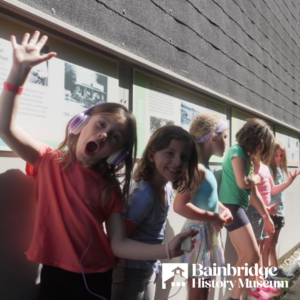
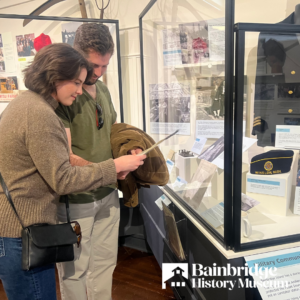
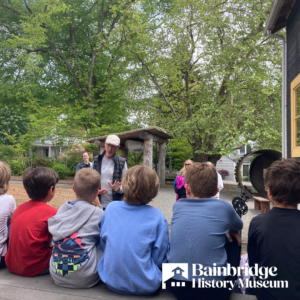
Situated within the ancestral territory of the suq̀ʷabš, “People of Clear Salt Water” (Suquamish People), the Bainbridge History Museum proudly serves the residents and visitors of Bainbridge Island. It is located in the historic Island Center Schoolhouse, a one-room schoolhouse first built in 1908. In order to fulfill its mission of preserving and sharing the stories of Bainbridge Island, the Bainbridge History Museum offers exhibit galleries and public programming to teach and celebrate the many stories of the island and its people. In addition, the museum offers access to its collections through its social media and its online collections portal.
WaMA reached out to the Bainbridge History Museum and invited its team to share the museum’s story in their own words.
About the Organization
Give us a short introduction to your organization. What do you want people to know about you?
The Bainbridge History Museum proudly serves the residents and visitors of Bainbridge Island. We preserve and share the stories of the island’s past to help promote a greater understanding of our community, spark curiosity, and inspire everyone who walks through our doors. Proving that small communities create big history, we celebrate Bainbridge Island’s unique heritage and evolution.
What makes your museum or organization unique?
As the only history museum on the island, we act both as ambassadors to visitors and as preservationists for residents. Becoming the connecting point between generations of people and the land, we help to place stories and memories within the island’s and the region’s broader context. Best of all, we strive every day to show everyone that history is fun!
Who do you serve, and what role do you play in your community?
We serve everyone who lives on, visits, or is interested in the history of Bainbridge Island. In-person, we invite people into our galleries and share countless stories with everyone from tourists to longtime residents. Online, we offer access to an ever-increasing amount of our collections through both social media and our online collections portal – working to share our holdings with researchers and islanders alike. Beyond that, we are a preservation organization, maintaining our collections and their stories for future generations of Bainbridge Islanders and visitors. Celebrating our island’s past, present, and future, we preserve, document, and share the stories that make us who we are today.
Exciting Things Happening
What’s something your organization is especially excited about right now?
Our online collections portal has made it possible for people to start their research journey or walk down memory lane from anywhere in the world. For the first time in our organization’s history, we are able to proactively connect people to families, organizations, individuals, and places through our database – providing more access than ever before to Bainbridge Island’s fascinating and unique history.
Do you have a new exhibit, project, partnership, program, renovation, acquisition, or initiative you’d like to share?
We are excited to be embarking on a capital campaign and expansion program to help us better serve our community. From adding galleries to building a multipurpose space that can be accessed by community groups, our expansion is community minded and a wonderful next step for the Museum!
Community and Impact
How does your organization connect with or support your community?
Through a number of community partnerships and collaborations, we work to help residents and organizations to document and preserve their history. From advising special interest groups on how to preserve their own records to collaborating on exhibits with other non-profits and organizations, we enjoy having close friends and fellow history buffs all over the island.
What impact do you hope your work has on Washington communities?
We hope that our work helps other communities to see the value in their stories. Too often people think that daily life isn’t interesting enough for history when we know that it is the everyday events and actions that create history itself. We are always thrilled to see local history museums shine and be recognized for celebrating the communities that we preserve and love!
Why WaMA?
Have you participated in a WaMA conference, program, advocacy effort, training, or networking opportunity that was especially meaningful?
Our team has participated in several WaMA conferences and always look forward to attending. They are a great opportunity to network and forge new partnerships and collaborations.
What would you tell another organization that’s considering joining WMA?
WaMA is a great organization and we have enjoyed making connections and learning alongside so many fantastic museum professionals across the state!
Fun/Personal Questions
What’s one object, exhibit item, or story in your collection you love talking about?
Most people don’t realize that our collection goes back thousands of years! We have our very own mammoth tooth that was found here on Bainbridge Island by a couple of local teenagers. Turned over to their teacher, the mammoth tooth ended up being studied by experts in Seattle and is estimated to be 10,000 years old.
What’s bringing your team joy right now?
We have received so many donations from local families and community organizations lately and we couldn’t be happier or more grateful to be trusted with their heirlooms and family legacies. From building partnerships with organizations to connecting people with their history, these donations help us to capture more of Bainbridge Island’s history all while highlighting the important roles played by everyone who has shaped our island along the way.
Experience the Bainbridge History Museum
In Person
215 Ericksen Avenue NE, Bainbridge Island, WA
Open daily, 10am-4pm
Free admission
Virtually
Website: https://www.bainbridgehistorymuseum.org/
Facebook and Instagram: @bainbridgehistorymuseum
Online Collections Portal: https://bainbridgehistorymuseum.pastperfectonline.com/
Member Museum Websites

Adams County Historical Museum
Alder Creek Pioneer Association
American Hop Museum
Anacortes Museum
Anderson Island Historical Society
AS-YOU-LIKE-IT Library dba Seattle Metaphysical Library
Bainbridge Island Historical Society
Bainbridge Island Museum of Art

Black Diamond Historical Society and Museum

Burke Museum
Two Rivers Heritage Museum
Cascade Rail Foundation
Cashmere Museum
Cheney Historical Museum
City of Grandview Museum
Clark County Historical Society & Museum
Columbia Gorge Museum
Columbia Pacific Heritage Museum
Columbia River Maritime Museum
Cowlitz County Historical Museum
Dayton Historical Depot Society
Douglas County Historical Society & Museum
DuPont History Museum
East Benton Country Historical Society/Museum at Keewaydin
Edmonds Historical Museum

Ellensburg Rodeo Hall of Fame
Entiat Community Historical Society
Fall City Historical Society
Ferndale Heritage Society / Pioneer Park Historic Log Cabins
Ferry County Historical Society
Fife Historical Society
Forks Timber Museum

Fort Nisqually Living History Museum
Fort Walla Walla Museum
Foss Waterway Seaport
Franklin County Historical Society
Frye Art Museum
Gallery One Visual Arts Center
Granger Historical Society
Grays Harbor Historical Seaport
Greater Bonney lake Historical Society
Greater Leavenworth Museum
Greentrike
Henry Art Gallery
Highline Heritage Museum
Historic Fort Steilacoom Association
History98520

Inland Northwest Rail Museum
Island County Historical Society Museum

Issaquah History Museums
Jack Straw Cultural Center
Japanese American Museum of Washington
Jefferson County Historical Society
Job Carr Cabin Museum
John Ford Clymer Museum & Gallery
Jundt Art Museum, Gonzaga University
Key Peninsula Historical Society & Museum
Kirkland Arts Center
Kitsap History Museum
Kittitas County Historical Museum
La Center Historical Museum
Lacey Museum

Lake Chelan Historical Society
Lake Stevens Historical Society
Lakewood Historical Society
Larson Gallery
Lelooska Foundation & Cultural Center
Lynnwood Alderwood Manor Heritage Association & Museum
Maryhill Museum of Art
McCleary Museum and Event Center

Moses Lake Museum & Art Center
Museum of Culture and Environment
Museum of History and Industry
Museum of Northwest Art
Museum of the North Beach
National Nordic Museum
Nature’s Window Museum
Neely Mansion Association
North Clark Historical Museum
Northern Kittitas County Historical Society

Northern Pacific Railway Museum
Northport Historical Society
Northwest African American Museum
Northwest Carriage Museum

Northwest Museum of Arts & Culture
Northwest Railway Museum

Olympia Arts & Heritage Alliance
Olympia Historical Society and Bigelow House Museum
Olympic Flight Museum
Orcas Island Historical Museums
Othello Community Museum
Pacific Coast Cranberry Research Foundation
Pacific Northwest Quilt & Fiber Arts Museum
Pacific Science Center

Point Roberts History Center
Polson Museum

Poulsbo Historical Society
Puget Sound Navy Museum

Quincy Valley Historical Society
REACH Museum
Renton History Museum
Seattle Art Museum
Seattle Universal Math Museum
Shafer Historical Museum
Shanaman Sports Museum

Skagit County Historical Museum

Southwest Seattle Historical Society

Spokane Valley Heritage Museum

Steilacoom Historical Museum Association
Tacoma Art Museum
The History Museum of Hood River County
Twin Bridges Historical Museum
Vashon-Maury Heritage Association
Washington National Guard Museum

Washington State Archives
Washington State Historical Society
Washington State Ski & Snowboard Museum
Washtucna Heritage Museum
Wenatchee Valley Museum & Cultural Center
Westport Aquarium
Westport South Beach Historical Society

Whatcom Maritime Heritage Museum
Whatcom Museum Foundation
White Bluffs Center for Quilting & Fiber Arts
Whitman County Historical Society
Wing Luke Museum of the Asian Pacific American Experience
World Kite Museum

Yakima Valley Museum